
Menu
Views: 0 Author: Site Editor Publish Time: 2026-11-23 Origin: Site


Commercial kitchens lose money when portion sizes drift. If line cooks eyeball a chicken and rice dish, you either shortchange the customer or kill your food cost margins. Inaccurate portioning directly leads to margin erosion for meal prep operators. It also causes frustrating dietary inconsistency for end-users relying on precise caloric intake. Inadequate packaging results in cross-contamination, compromised food quality, and poor presentation upon delivery. Transitioning to a purpose-built Aluminum Lunch Box solves these operational headaches. Specifically, compartmentalized foil designs provide a measurable, scalable solution. They enforce strict portion control, deliver superior thermal retention, and maintain an aesthetic organization that elevates the dining experience. Implementing the right container architecture streamlines kitchen workflows and guarantees food arrives exactly as the chef intended.
Structural Portioning: Multi-compartment aluminum designs eliminate the need for manual weighing at the consumer level by enforcing strict volume limits per food group, encouraging better-for-you dietary swaps.
Thermal & Protective Superiority: Aluminum offers unmatched temperature retention and structural rigidity compared to standard EPS foam or thin plastics, critical for safe transport.
Aesthetic & Functional Value: Adopting a "bento-style" organized look enhances perceived meal value, while proper locking mechanisms prevent leaks even with high-moisture foods.
Cost-to-Value Ratio: While unit costs vary, leveraging the right disposable aluminum foil container reduces overhead in dishwashing, prevents food spoilage, and scales efficiently for high-volume meal prep operations.
Risk Mitigation: Selecting the correct lid type (board vs. PET dome) and understanding aluminum's reactivity to highly acidic foods are the primary implementation hurdles to navigate.
Defining a successful portion-control container requires looking beyond basic food storage. A high-performing container must feature a fixed volume capacity to prevent accidental over-serving. It must guarantee zero flavor transfer between distinct recipe components. Stackability is non-negotiable for maximizing delivery vehicle space and refrigerator storage. Temperature stability ensures hot foods remain safe and cold foods stay crisp. The container acts as a physical tool for building a nutritionally balanced meal without requiring the user to measure ingredients manually. When you run a prep line pushing out 500 meals a day, you cannot afford to have staff weighing every single side of broccoli. The physical boundaries of the tray do the measuring for you.
Comparing aluminum against alternative packaging materials reveals stark contrasts in performance on the prep line and during transport. Polypropylene (PP) plastic often warps under high heat and retains stubborn grease stains. Molded fiber containers absorb moisture rapidly. This leads to soggy bottoms and compromised structural integrity during transit. EPS foam cracks easily and poses severe environmental concerns. Aluminum bypasses these flaws entirely. It provides absolute grease resistance. Its thermal conductivity reflects radiant heat, keeping meals at food-safe temperatures longer. The rigid sidewalls hold their shape under the pressure of stacked deliveries.
Packaging Material | Grease Resistance | Thermal Retention | Structural Rigidity (Stacked) | Moisture Barrier |
|---|---|---|---|---|
Aluminum Foil | Excellent | High | High | Absolute |
Polypropylene (PP) | Moderate (Stains) | Medium | Medium | High |
Molded Fiber | Low | Low | Low (Weakens when wet) | Poor |
EPS Foam | Medium | High | Low (Cracks easily) | High |
Physical dividers visually reinforce proper portion sizes. When a user sees a fully packed, smaller compartment, they experience psychological satisfaction. Placing that same small portion into a large, un-divided container makes the meal look sparse. This triggers feelings of dietary deprivation. Dividers improve user compliance with strict meal plans because the visual presentation implies abundance. Consumer demand for an organized look continues to rise. The bento aesthetic relies on the clean separation of food groups. This separation elevates the perceived quality of the meal. Ingredients do not bleed together into an unappetizing mixture. Vibrant vegetables, rich proteins, and complex carbohydrates stand out individually. This makes the meal visually striking and highly appetizing. When customers open the lid, they want to see distinct components, not a mixed casserole of ingredients that shifted during the delivery drive.
Container designs cater to distinct operational needs. Commercial meal prep services require robust, high-volume solutions. Adult fitness regimens demand precise macro-nutrient separation. Structured school lunch programs need durable, easy-to-open formats that handle diverse, kid-friendly portions. Selecting the right structural layout dictates the success of the food program. You have to match the tray geometry to the specific menu you are executing.
The 3 Section Aluminum Foil Container stands as the undisputed industry standard for macro-balanced meals. The layout typically features one large section dedicated to primary proteins or complex carbohydrates. Two smaller sections house vegetables, sauces, or side dishes. This specific geometry naturally aligns with targeted caloric ranges and standard dietary guidelines. A standard 750ml tray might allocate 400ml to the main dish and 175ml to each side.
This design actively facilitates better-for-you swaps. Dedicated smaller compartments encourage users to include diverse food groups. You can easily swap a heavy, calorie-dense side for a nutrient-rich vegetable. The physical barrier ensures wet vegetable juices never ruin the texture of a crispy protein. This separation maintains food integrity from the kitchen to the dining table.
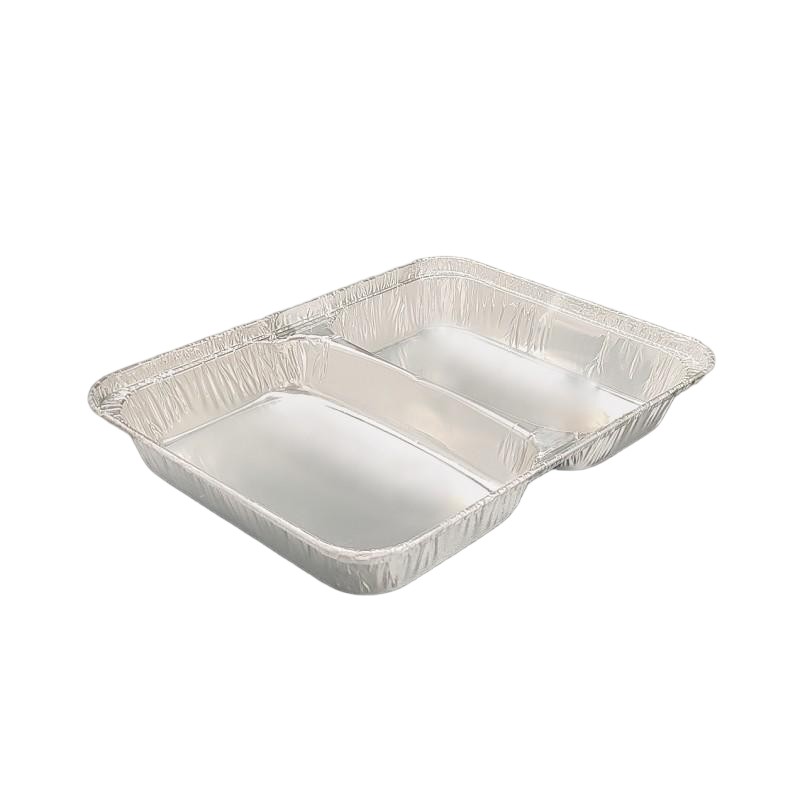
Single-compartment trays serve a specific purpose for bulk bases. They handle large casseroles, family-style salads, or heavy pasta dishes perfectly. They fail when precise portion control is necessary. Dual-compartment layouts bridge the gap. A Compartment Aluminum Foil Container with two sections handles simple protein-and-side pairings effortlessly. It keeps rice separate from curry or chicken separate from roasted potatoes. This maintains distinct flavor profiles and prevents starches from absorbing all the moisture from the protein. If you pack a chicken breast on top of a bed of rice in a single compartment, the rice pulls the moisture out of the chicken during reheating. The dual compartment stops this moisture migration entirely.
Smaller footprint trays offer immense versatility. A Small Aluminum Foil Tray works perfectly for snacks, rich desserts, or strict calorie-deficit meal plans. Operators frequently integrate these small trays as modular inserts within larger delivery boxes. This modular approach separates temperature-sensitive items.
Here is how modular tray integration works in a commercial setting:
Prep cold items like salads or fruit in the small trays and store them in the walk-in cooler.
Prep hot entrees in standard single-compartment trays and hold them in warming cabinets.
During the final pack-out, place both the hot tray and the cold small tray into a single insulated delivery bag.
The customer receives a complete meal with distinct temperature zones intact.
These compact trays also adapt brilliantly for healthy, portion-controlled kids' lunchboxes. Children require smaller, highly diverse food portions to stay engaged with their meals. Small trays deliver this variety without overwhelming the child with adult-sized servings.
When planning your menu, understanding the exact dimensions of your trays prevents over-purchasing ingredients. A standard 3-compartment tray often measures around 8.5 x 6.5 inches with a depth of 1.5 inches. This depth is critical. If the tray is too shallow, sauces spill over the dividers during transport. If it is too deep, the food looks lost in the container, making the customer feel shortchanged. You must calibrate your scoops and ladles to match the exact milliliter capacity of each compartment. For example, use a #8 scoop for the main carbohydrate to perfectly fill a 400ml section without crowning, which would interfere with the lid seal.
Evaluating container features requires mapping them directly to operational outcomes. A feature only holds value if it improves kitchen efficiency, enhances food safety, or elevates the end-user experience. We must analyze thermal dynamics, lid compatibility, and scalability on the prep line.
Aluminum excels at heat distribution. In conventional ovens, the metal conducts heat rapidly and evenly. This eliminates cold spots in dense foods like lasagna or shepherd's pie. The microwave compatibility debate often causes confusion. Modern guidelines confirm that smooth-wall aluminum containers are microwave-safe under specific conditions. The container must remain uncovered. It cannot touch the interior microwave walls. The microwave must be a post-1980 model. Despite this convenience, oven reheating always yields superior food texture and moisture retention.
Aluminum's thermal conductivity works both ways. It is not just about keeping food hot; it is about getting food cold quickly. In a commercial cook-chill operation, you must drop the temperature of cooked food through the danger zone (135°F to 41°F) as fast as possible. Aluminum trays placed in a blast chiller transfer heat away from the food significantly faster than plastic or foam. This rapid chilling extends the shelf life of the meal and prevents the growth of harmful bacteria. When the customer moves the meal from the freezer directly to the oven, the aluminum handles the extreme temperature swing without cracking or shattering.
Lid selection dictates transport security and presentation. You generally have two main options, each with distinct operational trade-offs.
Foil-laminated board lids: These excel at heat retention. They stack securely in delivery bags and accept adhesive labels flawlessly. They offer zero visibility, meaning the customer cannot see the food until they open it.
Clear PET dome lids: These provide superior food presentation and aesthetic appeal. Customers eat with their eyes first, and clear lids showcase the meal. The trade-off is that PET lids require careful, precise crimping to ensure a leak-resistant seal.
Handling high-moisture foods tests the limits of any container. The locking mechanism must transport challenging items like soups, heavy sauces, or yogurts without breaching the internal compartment walls. A weak seal allows liquids to bleed across dividers. This ruins the bento aesthetic and compromises food safety.
Assess your locking mechanism based on volume. Manual crimping works for boutique operations doing under 100 meals a day. High-volume kitchens require automated or semi-automatic sealing machines. These machines apply uniform pressure. They guarantee a consistent, leak-proof seal on every unit while reducing repetitive strain injuries for kitchen staff.
Efficiency drives profitability in commercial kitchens. A well-designed Meal Prep Aluminum Foil Container features excellent nesting capabilities. Tight nesting maximizes warehouse storage efficiency. You can store thousands of units in a minimal footprint. On the commercial prep line, containers must un-nest smoothly without sticking together. Fast, frictionless assembly directly impacts labor costs and daily output capacity. If your line cooks spend five seconds prying two stuck trays apart, you lose hours of productivity over a week.
The physical layout of your prep line dictates your labor costs. When using aluminum trays, set up your stations to minimize hand movements. Place the nested empty trays at the start of the line. Because aluminum trays are lightweight and nest tightly, you can stack 100 trays in a single dispenser. As the tray moves down the line, each cook adds their specific component. The rigid edges of the foil tray allow cooks to slide the container along stainless steel prep tables without catching or buckling. At the end of the line, the crimping station must be set at the correct ergonomic height to prevent shoulder strain when sealing hundreds of lids per hour.
Analyzing operational trade-offs reveals the true value of your packaging choices. Upfront unit costs only tell a fraction of the story. You must evaluate labor reduction, food waste mitigation, and supply chain reliability to understand the full economic impact on your kitchen.
Calculate your cost-per-unit against the massive reduction in labor. Utilizing a Disposable Aluminum Foil Container eliminates the need to wash, sanitize, and track reusable containers. This cuts water usage, chemical costs, and dedicated dishwashing labor hours entirely. Bulk purchasing thresholds further improve economics. Securing pallet-level pricing brings the per-meal packaging cost down to highly manageable levels. It ensures steady supply chain reliability during peak seasons.
Aluminum boasts infinite recyclability. It vastly outperforms single-use plastics in sustainability metrics. You must navigate local municipal recycling capabilities. Some facilities require aluminum to be rinsed completely clean of food debris before processing. Always ensure your chosen packaging meets strict FDA compliance for food-grade aluminum. Non-compliant metals can leach contaminants into the food supply. When sourcing your trays, request the manufacturer's compliance certificates. You need documentation proving the foil thickness and the food-safe nature of any lubricating oils used during the stamping process.
Implement these recycling prep steps in your kitchen to ensure compliance:
Scrape all solid food waste into the compost or trash bin.
Rinse the aluminum tray with hot water to remove heavy grease and sauces.
Do not crush the tray completely flat, as some municipal sorting machines rely on the 3D shape to identify the material.
Bundle multiple clean foil trays together into a larger ball to ensure they do not slip through the sorting screens at the recycling facility.
Storing highly acidic or salty foods directly on raw aluminum presents a significant implementation risk. Tomato sauces, citrus marinades, and heavy vinegar dressings cause a chemical reaction over time. This reaction leads to pitting, degradation, and an unpleasant metallic taste in the food. Mitigate this risk by utilizing polymer-coated aluminum options for acidic menus. Alternatively, adjust your menu acidity profiles or use parchment barriers for long-term freezing and storage.
Transitioning to compartmentalized aluminum packaging requires careful alignment between your menu, your prep line, and your delivery logistics. To successfully implement this packaging upgrade and protect your food cost margins, execute the following steps:
Audit your current menu specifically for acidity levels, moisture content, and target portion volumes to determine the exact tray depth required.
Request physical samples of both foil-laminated board and clear PET dome-lidded containers to rigorously test crimp seals against leaks with your wettest menu items.
Run a comprehensive 30-day thermal transport test to evaluate temperature retention and structural integrity under real-world delivery conditions.
Calculate your exact labor savings derived from eliminating dishwashing workflows to justify bulk purchasing volumes and secure pallet-level pricing.
A: Yes, under specific conditions. Modern, shallow aluminum containers can be microwaved if they do not touch the microwave walls, are uncovered, and the microwave is manufactured after 1980. However, oven reheating is always recommended for optimal food texture.
A: The raised divider walls are designed to sit flush against the lid when properly crimped. This creates a physical barrier that stops sauces and liquids from bleeding into adjacent compartments during transit.
A: While highly leak-resistant when properly crimped with a compatible lid, standard foil containers are better suited for viscous sauces and solid foods. For highly liquid items like thin soups or yogurts, a specialized polymer-sealed film lid or a dedicated secondary liquid container is recommended to guarantee zero leakage.
A: For commercial operations, the labor saved on washing and the reduction in food spoilage due to superior temperature retention offsets the recurring unit cost. Buying in bulk brings the per-meal cost down significantly.
A: Yes. Highly acidic foods like tomato paste, vinegar, or citrus can cause a reaction with uncoated aluminum over time, leading to pitting and a metallic taste. For these foods, a coated aluminum tray or a barrier layer like parchment is required.
A: For low volume, manual crimping of the foil edges over a board lid provides a secure seal. For high-volume commercial prep, investing in a manual or semi-automatic foil crimping press ensures consistent, leak-resistant closures and reduces repetitive strain injuries.